Shasta warns King Lune
The Horse and His BoyShasta warns King Lune that Rabadash and two hundred horsemen are advancing on Anvard, turning a desperate, footsore arrival into an urgent call to action. The scene joins two revelations: King Lune initially mistakes Shasta for his missing son, Prince Corin, while Shasta’s warning gives the king grounds to act before the enemy reaches the castle. In retrospect, Aslan explains that he guided Shasta through the dangers that made this timely meeting possible.
The encounter in the glade
Shasta reaches a gate and runs uphill through grass and heather toward trees, with no plan beyond continuing forward. He is exhausted and unsteady, and his flight has left him with little capacity for anything but reaching help. A merry hunting horn sounds; emerging into a glade, he finds a small party of gentlemen in green hunting clothes beside their horses. King Lune is among them, about to mount.
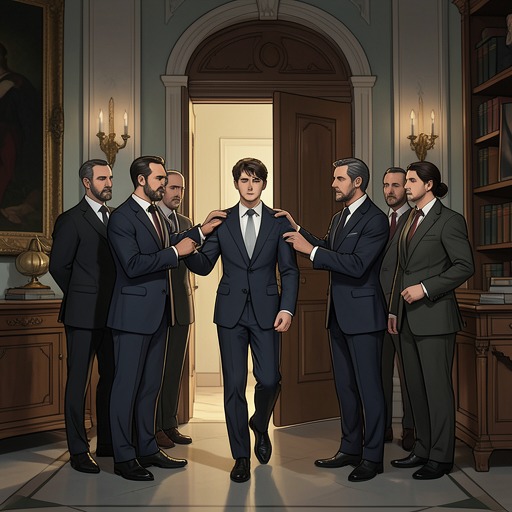
At the sight of the ragged boy, Lune forgets the horse and opens his arms, hailing him as Prince Corin. Shasta corrects him: he is not Corin, though he resembles the prince and saw him in Tashbaan. That mistaken recognition makes the encounter more than a chance audience with a king: the likeness between the two boys is immediately apparent, even before Shasta can explain why he has come.
The warning and the king’s response
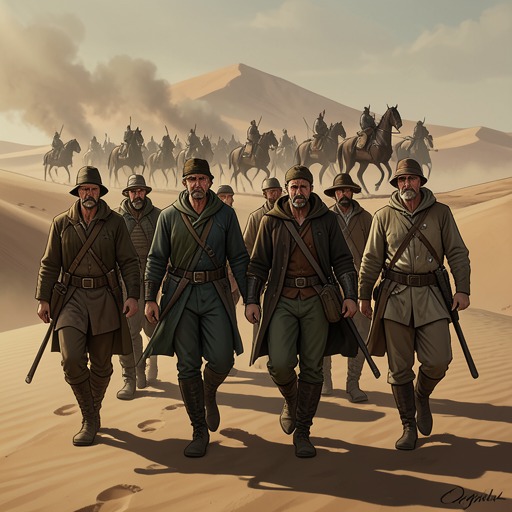
Shasta identifies Lune and, without waiting for the king to answer, delivers his urgent message: Anvard must shut its gates because enemies are approaching. Asked by Lord Darrin whether he can be certain, Shasta answers that he saw them himself and raced ahead of them from Tashbaan. The pursuers are Rabadash and two hundred horsemen; the warning is not rumor but the report of an eyewitness who has traveled ahead of the force.
Darrin briefly questions how Shasta could have come on foot. Shasta explains that he had horses with the Hermit. Lune stops the questioning, says he sees truth in the boy’s face, and orders the party to ride. He has a spare horse brought for Shasta and asks whether he can ride fast. Shasta answers by mounting at once. His ease in the saddle reflects the practice he has gained with Bree during the preceding weeks, a sharp contrast with his awkwardness when he first tried to mount.
Darrin recognizes the boy’s seat as that of a true horseman and suggests that he may have noble blood. The comment reinforces the scene’s doubled recognition: Shasta has been mistaken for Corin because of their resemblance, and his bearing now prompts a separate inference about his own birth. The immediate consequence, however, is practical. Lune accepts the warning and makes Shasta part of the response, rather than leaving him behind as an exhausted messenger.
From peril to timely arrival
The warning follows a journey in which Shasta and his companions have repeatedly faced danger. When he later tells Aslan his story, Shasta recounts his unknown parentage and stern upbringing by a fisherman, his escape, the pursuit by lions, and the dangers he and his companions encountered in Tashbaan. He also describes the difficult desert crossing and the lion that chased them near their goal and wounded Aravis. These memories place his arrival before Lune within the larger chain of events that made the warning possible.
Shasta’s account also shows the limited view from which he acted. He understands that he has seen Rabadash’s force and that he must reach the king in time; he does not yet know that the separate dangers of the journey have belonged to one guiding presence. Aslan later tells him that he was the lion who drove Shasta into Aravis’s company, comforted him among the tombs, kept jackals from him, and gave the horses strength for the final mile so that Shasta could reach Lune in time. The warning therefore has two explanations in the narrative: Shasta’s own effort carries the news, while Aslan’s guidance accounts for the sequence that brings him to the king.
Aslan’s account and the meaning of the warning
When Shasta asks whether Aslan was also the lion who wounded Aravis, Aslan confirms that he was, but refuses to explain that part of her story to Shasta. He tells the boy that he is telling Shasta his own story and tells no one another person’s. This limit matters: the warning scene belongs to Shasta’s account of how he reached Lune, even though the journey also affected Aravis. Aslan’s explanation reveals the pattern of his guidance without turning another character’s experience into Shasta’s to possess.
The encounter thus converts physical endurance into public responsibility. Shasta, who arrives in rags and is first taken for someone else, proves that he can deliver a specific, firsthand warning and mount quickly when action is needed. Lune’s immediate decision to ride gives the encounter its decisive consequence: the report of Rabadash’s approach reaches the king in time to prompt a response, and Shasta’s place in the unfolding danger changes from pursued traveler to participant in the effort to meet it.